Neighborhoods
Best Brooklyn Neighborhoods for Young Professionals
There is no single best neighborhood in Brooklyn. There is the one that puts you on the right train. This guide compares eight of them by the things you can check: subway lines, the trip to work, the buildings and what is around the corner.
Sublet Buddy Guides5 min read
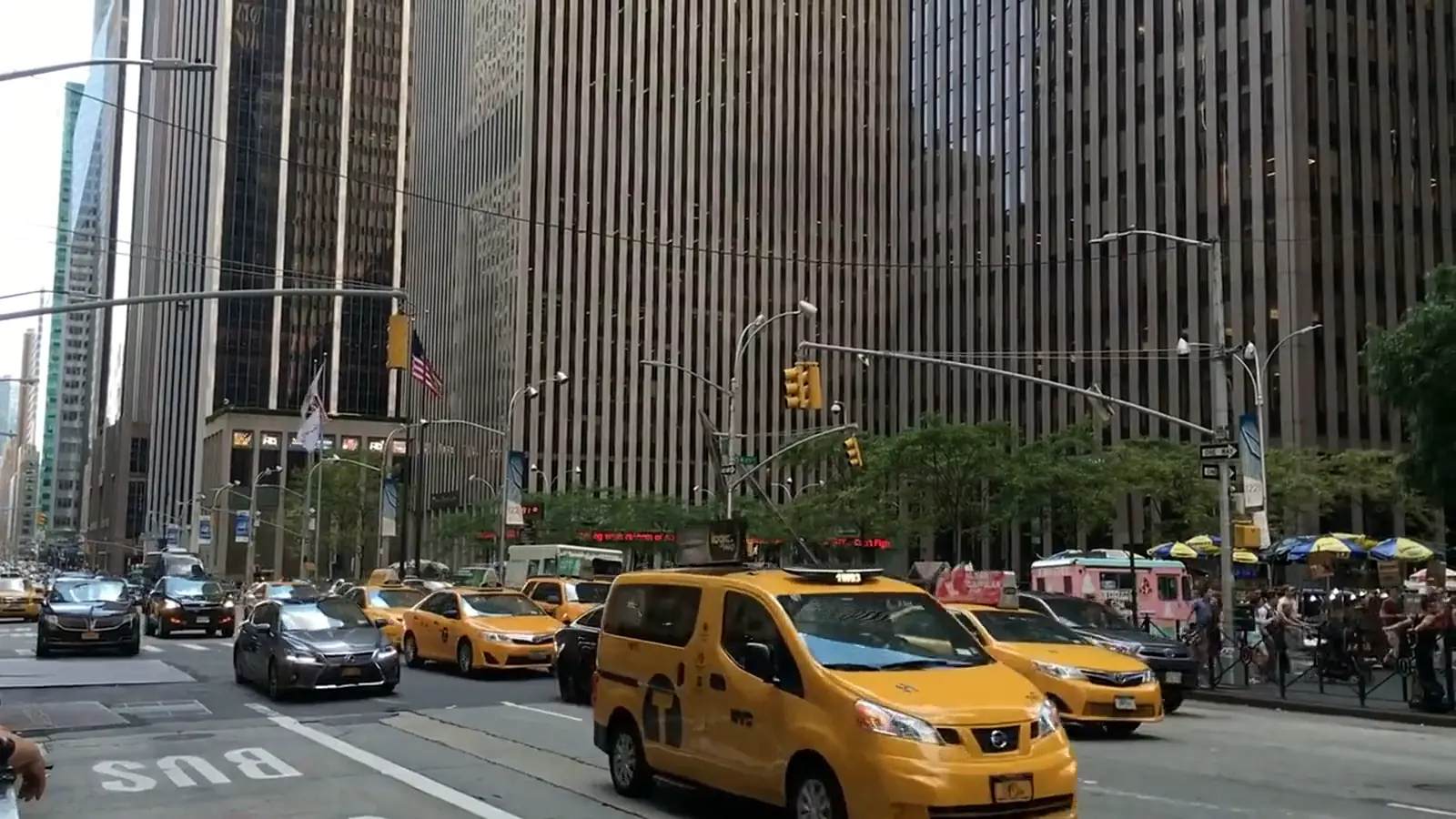
Midtown Manhattan. Photo: Sublet Buddy.
In This Guide 11 sections
How to Use This Guide
Start with where you work. Find the subway lines that stop near the office, then look at the Brooklyn neighborhoods on those lines. Trip times below are typical subway rides in normal service, rounded, station to station. Your door-to-door time will be longer, and weekend service changes are a fact of life, so check a trip planner for your own addresses.
Every neighborhood here is open to anyone. We describe places, not people.
Williamsburg
Trains: the L along Bedford, Lorimer and Graham Avenues, the G at Metropolitan Avenue, and the J, M and Z at Marcy Avenue. The L reaches Union Square in about ten minutes from Bedford Avenue, and the M runs straight into Midtown. The East River ferry stops at North and South Williamsburg.
Buildings range from low-rise walk-ups to newer towers along the waterfront. Nearby: McCarren Park, Domino Park, and one of the densest stretches of restaurants, music venues and shops in the borough. It is among the most expensive parts of Brooklyn.
Greenpoint
Trains: the G at Greenpoint Avenue and Nassau Avenue. The G does not enter Manhattan, so most trips mean a transfer: to the L at Metropolitan Avenue, or to the 7, E or M at Court Square. The ferry from the Greenpoint landing is a real alternative for the East Side and Wall Street.
Mostly low-rise blocks with newer buildings by the water. Nearby: McCarren Park on the southern edge, Transmitter Park on the river, and Manhattan Avenue and Franklin Street for everyday shopping and food. Quieter than its neighbor to the south, with a longer commute as the trade.
Bushwick
Trains: the L from Morgan Avenue out to Myrtle–Wyckoff, the M along Myrtle Avenue, and the J and Z along Broadway. From the Jefferson Street stop, Union Square is roughly twenty minutes on the L.
Converted industrial buildings and lofts near the Morgan and Jefferson stops, row houses and small apartment buildings farther out. Nearby: Maria Hernandez Park, a large mural district, and a lot of music and nightlife. Rents are generally lower than in Williamsburg for more space.
Park Slope
Trains: the F and G along 9th Street and 7th Avenue, the R under 4th Avenue, the 2 and 3 at Grand Army Plaza and Bergen Street, and the B and Q at 7th Avenue. The Financial District is about twenty minutes away and Midtown about thirty.
Brownstones and limestone row houses on the side streets, larger apartment buildings along 4th Avenue. Nearby: Prospect Park along the whole eastern edge, and 5th and 7th Avenues for restaurants and shops.
Fort Greene and Prospect Heights
Trains: these two sit on either side of Atlantic Avenue–Barclays Center, where the 2, 3, 4, 5, B, D, N, Q and R all meet, plus the G and C in Fort Greene. That hub makes almost any Manhattan office a one-train trip: about fifteen minutes to the Financial District and twenty-five to Midtown.
Brownstone blocks and a growing number of towers near the arena. Nearby: Fort Greene Park, the Brooklyn Academy of Music, the Brooklyn Museum and the northern entrance to Prospect Park.
Brooklyn Heights and DUMBO
Trains: the 2 and 3 at Clark Street, the 4 and 5 at Borough Hall, the A and C at High Street, the R at Court Street and the F at York Street. Wall Street is one or two stops away, which makes this the shortest Brooklyn commute to the Financial District.
Brooklyn Heights is a landmarked district of row houses and pre-war apartment buildings; DUMBO is converted warehouses and new construction. Nearby: the Promenade and Brooklyn Bridge Park. Both are at the top of the Brooklyn price range.
Bed-Stuy and Crown Heights
Trains: Bed-Stuy has the A and C along Fulton Street, the G along Lafayette and Marcy Avenues, and the J, M and Z on its northern edge. Crown Heights has the 2, 3, 4 and 5 along Eastern Parkway and the A and C to the north. Express trains make the Financial District about twenty to twenty-five minutes and Midtown thirty to thirty-five.
Long blocks of brownstones and row houses, with apartment buildings on the avenues. Nearby: Herbert Von King Park in Bed-Stuy; the Brooklyn Museum, the Botanic Garden and Prospect Park along the western side of Crown Heights. Rooms here generally cost less than in the neighborhoods closer to the river.
Match the Neighborhood to the Office
- Financial District: Brooklyn Heights, DUMBO, Fort Greene, Park Slope, Crown Heights.
- Midtown East and Grand Central: anywhere on the 4 and 5 (Borough Hall, Atlantic Avenue, Crown Heights).
- Midtown West and Times Square: the 2 and 3, the Q and the N from Atlantic Avenue, or the M from Williamsburg and Bushwick.
- Union Square, Chelsea and the Meatpacking District: the L from Williamsburg and Bushwick.
- Hudson Yards: the L to 8th Avenue and a walk, or a transfer to the 7.
Try Before You Sign
A twelve-month lease is a big bet on a neighborhood you have only visited. Subletting for a month or a summer first lets you learn the commute, the noise and the grocery run before you commit. Compare the rent total for your dates rather than the monthly figure, and ask for the landlord’s written approval of any sublet.
Questions
Which Brooklyn neighborhood has the shortest commute to Manhattan?
Brooklyn Heights and DUMBO for the Financial District (one or two stops), and Williamsburg for Union Square (about ten minutes on the L). The area around Atlantic Avenue–Barclays Center has the most lines.
Where is rent lower in Brooklyn with a reasonable commute?
Rooms in Bushwick, Bed-Stuy and Crown Heights generally cost less than in Williamsburg, Brooklyn Heights or Park Slope, with rides of roughly twenty to thirty-five minutes to Manhattan offices.
Can I live in Brooklyn for a few months before signing a lease?
Yes. A sublet of 30 days or more lets you try a neighborhood for a month, a summer or a semester.
Ask the Guide Beta
Still Have a Question?
Answers come only from our own guides, with the guides linked so you can read the detail.
Official Sources
Laws, prices and city rules change. Check these pages for the current version before you rely on any summary, including this one.
Link to This Guide
Found this useful? Share it with your club, class or readers. You’re welcome to link to it and quote it with credit.
<a href="https://www.subletbuddy.com/guides/best-brooklyn-neighborhoods-young-professionals">Best Brooklyn Neighborhoods for Young Professionals</a> (Sublet Buddy Guides)This is general information, not legal advice. Rules differ by state, city, building and lease. Check your lease, get your landlord’s written approval before you sublet, and ask a local attorney about your situation.
Keep Reading
 Interns & New GradsWhere Banking and Consulting Interns Live in NYCSummer analyst or associate in New York? Where the offices are (Midtown, Hudson Yards, downtown) and the neighborhoods with the shortest commute.
4 min read
 NeighborhoodsManhattan vs. Brooklyn vs. Queens: Renting ComparedManhattan vs Brooklyn vs Queens for renters: median asking rents by bedroom count, how the commutes differ and what kinds of buildings you will find.
4 min read